
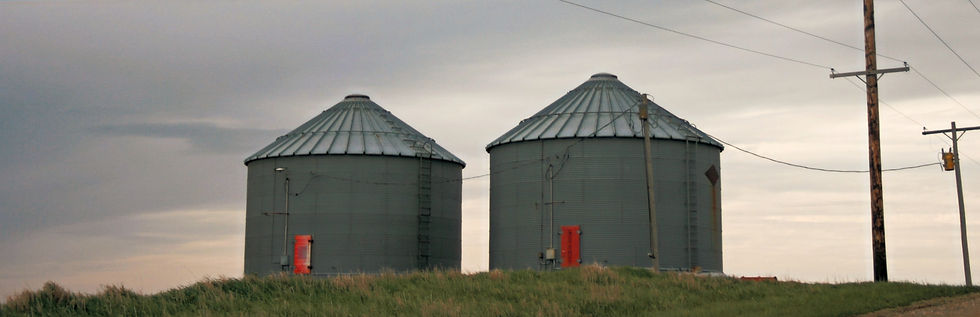
Notice to Farmers, Lenders, and Grain Bin Installers
Each year, NVREC has several requests from members to build services for new grain bin facilities, so we want to remind you of the proper clearance rules concerning electric lines.
The State of Iowa requires specific clearances for electric lines around grain bins, with different standards for those filled by portable augers, conveyors, and elevators, and permanent equipment. In fact, the Iowa Electrical Code Chapter 199 – 25.2(3) b states: an electric utility may refuse to provide electric service to any grain bin built near an existing electric line which does not provide the clearance required by The American National Standards Institute (ANSI) C2-2017 "National Electrical Safety Code," Rule 234f. This paragraph "b" shall apply only to grain bins loaded by portable augers, conveyors or elevators and built after September 9, 1992, or to grain bins loaded by permanently installed augers, conveyors or elevators built after December 24, 1997. The Iowa Utilities Commission has adopted this language.
Nishnabotna Valley REC is required by the Iowa Utilities Commission to provide this annual notice to farms, farm lenders, grain bin merchants, and city and county zoning officials. The drawings linked here show the specific clearances, regulations, or what needs to be done before you begin placing a new grain bin or moving an existing one.
If you have questions concerning clearance regulations, please call NVREC at 712-755-2166 or Northwest Iowa Power Cooperative at 712-546-4141.
Disclaimer: These drawings are provided as part of Iowa electric cooperatives' annual public information campaign and are based on the 2017 Edition of the National Electrical Safety Code. To view the actual drawings, refer to that publication. Every care has been taken for the correctness of the contents for these drawings. However, the Iowa Association of Electric Cooperatives and its member cooperatives accept no liability whatsoever for omissions or errors, technical inaccuracies, typographical mistakes or damages of any kind arising from the use of the contents of these drawings, whether textual or graphical.